Glan Exteriors

Conservatories & solar

Conservatory Roof & Solar Panel Cleaning

Both jobs are the same problem: a sloped glazed surface that is hard to reach, and where anything left behind on it is immediately obvious once the sun is on it.

Transformation

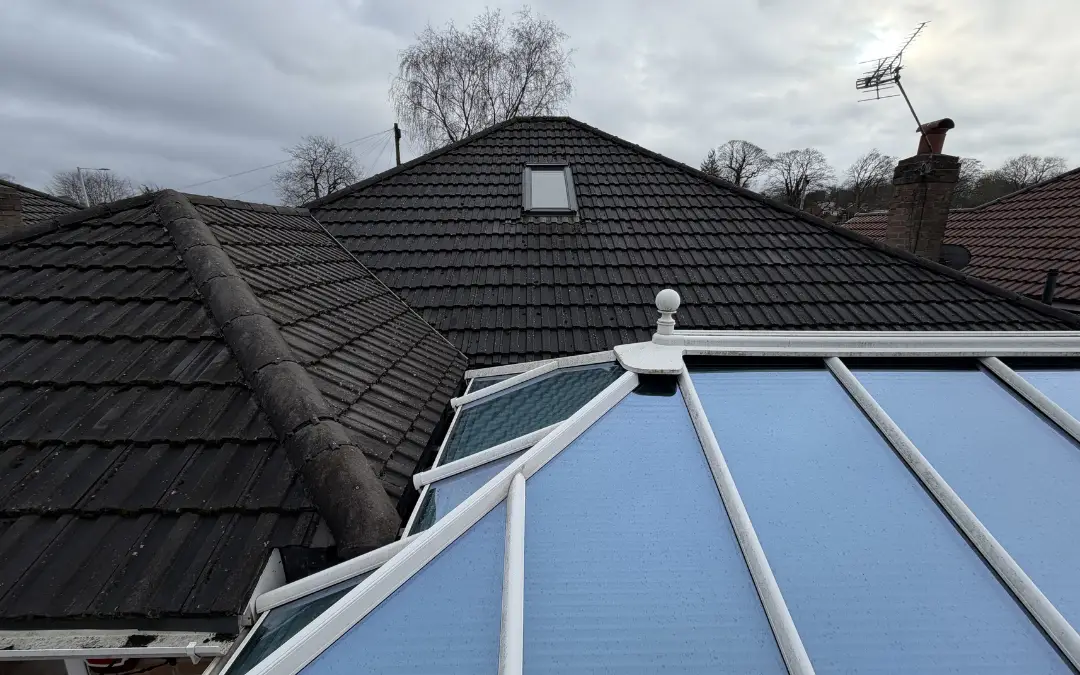
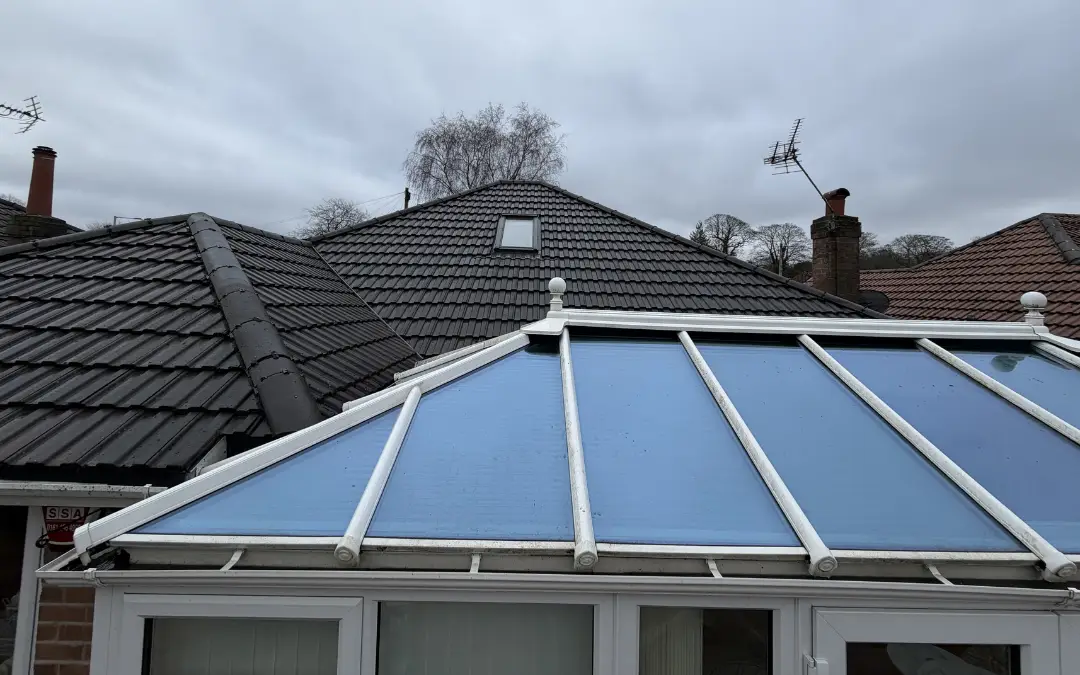
Conservatory roof and glazing bars

Green film along the glazing bars and across the glass, with debris collected in the box gutter.

The same conservatory roof cleaned, bars white and glass clear
A conservatory roof with green growth on the glazing bars
BeforeAfter
Drag the photo, or use the slider. Left of the divider: before. Right: after.

What we did

Cleaned top and bottom, glazing bars done by hand, and the box gutter cleared while the access was up.

More before and afters

Method

Sloped glass, and nothing left behind on it

Both jobs are the same problem: a surface that is hard to reach and unforgiving of anything left on it to dry.

Deionised water, so it dries clear

Tap water carries dissolved minerals and leaves them behind as it evaporates, which is what produces spots and streaks on glass. Deionised water has those removed, so the surface dries clear without needing to be squeegeed — which matters when the surface is a sloped roof nobody can safely stand on to finish by hand.

Top and bottom on a conservatory

The outside collects growth and the inside of the glazing collects condensation marks and dust. Cleaning only the outside leaves a roof that still looks dirty from the room underneath, which is the only place anyone actually sits and looks at it.

The box gutter is usually the real problem

Where a conservatory meets the house there is normally a box gutter, and it is invisible from every angle a homeowner can reach. It silts up, it overflows into the join, and the first sign is a leak at the wall. It gets cleared while the access is up, because reaching it is the expensive part rather than the clearing.

Nothing abrasive near panels or polycarbonate

Solar glass carries an anti-reflective coating and polycarbonate scratches from almost anything. Both are cleaned with soft brushes and water alone — no detergents, no blades, no abrasive pads. A scratched panel scatters light permanently, which is the opposite of the reason for cleaning it.

Lichen at the panel edges

On an array that has been in place for years, the growth that matters is not the film across the glass but the lichen creeping in from the frame edges. It shades whole cells rather than dimming them evenly, and because panels in a string behave as one, a small shaded area costs more output than its size suggests.

Being straight about it

We will not quote you a percentage

Solar panel cleaning is sold on output figures. Here is why this page does not carry one.

Dirty panels produce less than clean ones, and cleaning recovers the difference. That much is straightforward. The figures used to sell the service — a specific percentage, applied to any array, quoted by someone who has not seen yours — are not measurements of anything. Recovery depends on how soiled the array actually is, what kind of soiling it is, and how the panels are wired.

What is worth knowing is the mechanism. An even film of dust dims everything slightly. Lichen at the panel edges and bird mess do something worse: they shade cells completely, and because panels in a string are limited by their weakest member, a small shaded patch costs more than its area suggests. That is why the edges get as much attention as the glass.

If you have inverter history, compare the fortnight before with the fortnight after. It is real evidence about your roof, which is better than a number from ours. Where the array sits above a conservatory, the box gutter is usually due at the same time.

Get it quoted

Useful to send: a photo showing the roof or array and how high it sits, and for a conservatory, one from inside looking up. Panel count and roof pitch help if you know them.

Request a Quote

Questions

About conservatory and solar panel cleaning

Does cleaning solar panels actually increase output?

Soiling reduces output and removing it recovers what was lost — that much is not in dispute. What varies enormously is how much, and any specific percentage quoted for a panel nobody has seen is marketing rather than measurement. It depends on how dirty the array is, what kind of soiling it is, and where the panels sit. Edge lichen and bird mess matter more than an even film of dust, because they shade cells rather than dimming them. Your own inverter history before and after is far better evidence than any figure we could give you.

Will you scratch the panels or the polycarbonate?

Not with the right method. Solar glass has an anti-reflective coating and polycarbonate marks easily, so both are cleaned with soft brushes and pure water only — no detergents, no scrapers, no abrasive pads. The risk is real enough that it rules out the shortcuts: a blade on a stubborn mark scratches permanently, and on a panel a scratch scatters light for the rest of its life.

Do you clean the inside of the conservatory roof?

Yes, and it is usually the half that makes the visible difference. The outside carries growth and the inside carries condensation marks, dust and cobwebs in the glazing bars. Since the only place anyone looks at a conservatory roof is from the room underneath, cleaning the outside alone tends to disappoint — the roof is clean and it does not look it.

What about the gutter where the conservatory meets the house?

That is the box gutter, and it is the most commonly neglected part of a conservatory because it cannot be seen from the ground or from inside. It fills with leaves and silt, overflows at the junction with the house wall, and shows up as a leak that gets blamed on the seal. It is cleared as part of the job while access is already in place.

How often do panels need doing?

Every couple of years suits most domestic arrays, and rain does more of the work than people expect on a steeply pitched array. What shortens that is a shallow pitch that lets soiling sit rather than wash off, trees or a flight path overhead, coastal salt, or agricultural dust. If output has drifted down over a few seasons rather than dropping suddenly, soiling is a reasonable first thing to rule out.

Can I clean the panels myself?

You can, and for a single-storey array reachable safely with a hose and a soft brush it is often unnecessary to pay anyone. Where it goes wrong is the method rather than the decision to DIY — an abrasive pad, a jet washer held too close, or standing on the panels to reach the far edge can all mark a warranty claim as void, and none of that is obvious from the ground.

Conservatory roof or panels due?

Send a photo showing how high it sits and we will quote it, box gutter included.

Call Now085 169 0593Get a Quote