Glan Exteriors

Gutter cleaning

Gutter Cleaning & Clearing

A blocked gutter does not announce itself. It shows up as a damp patch on an inside wall, a stained render line, or a downpipe that overflows in exactly the weather nobody wants to be outside in.

Transformation

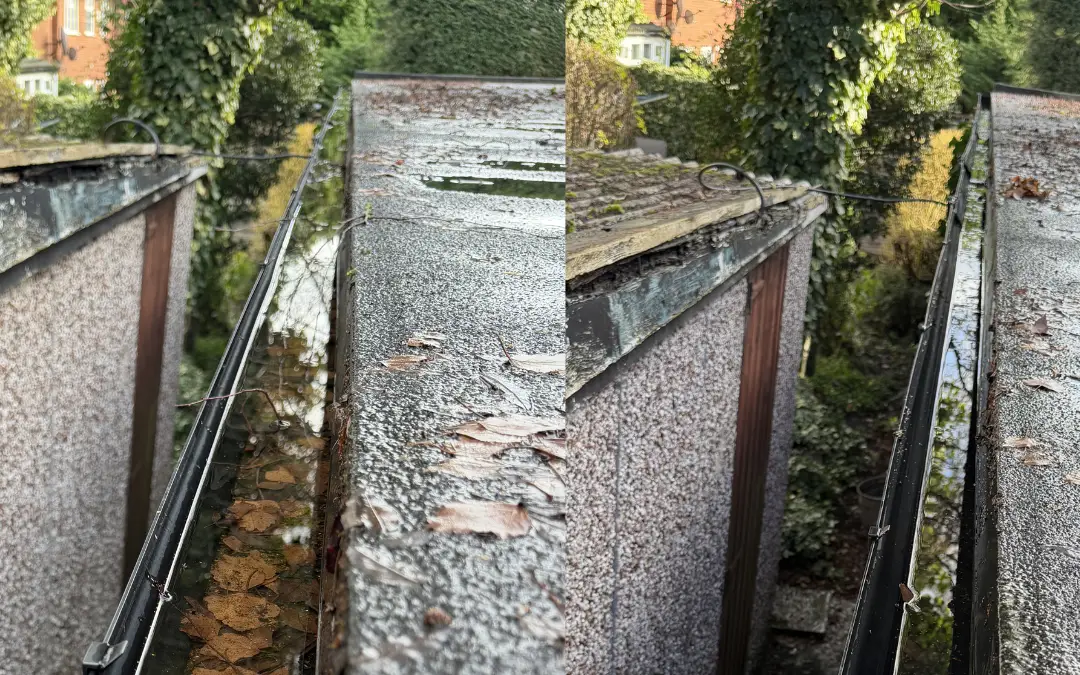
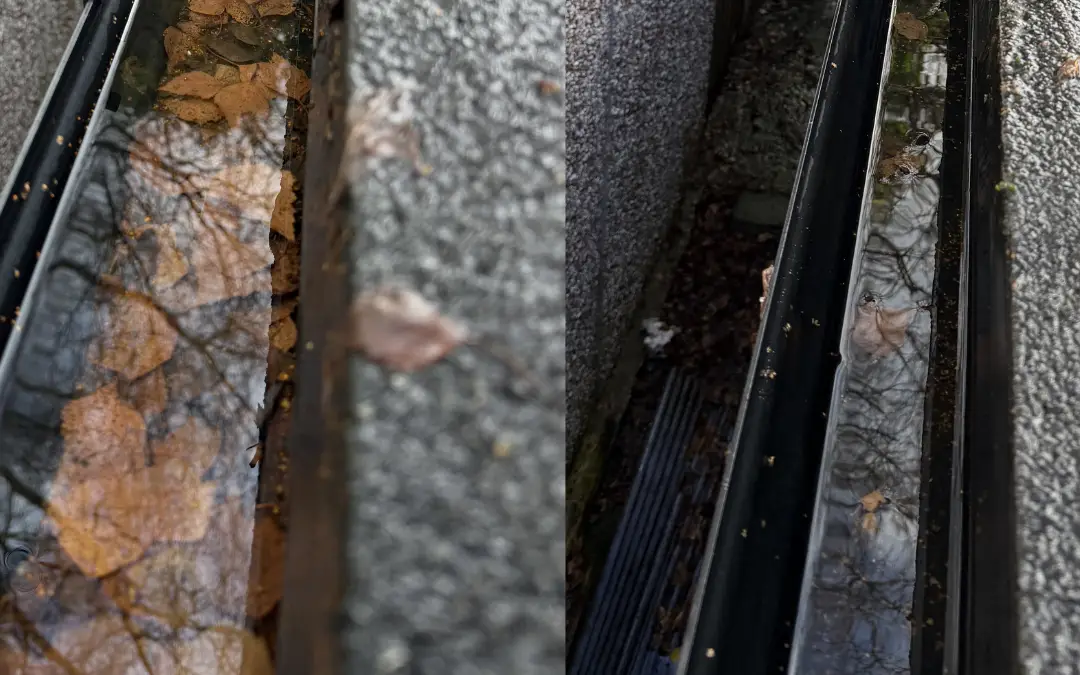
Blocked gutter run cleared

A full run silted up with leaf litter and moss, standing water sitting behind the blockage.

The same gutter cleared back to the bare channel
A gutter full of silt, moss and leaf litter
BeforeAfter
Drag the photo, or use the slider. Left of the divider: before. Right: after.

What we did

Cleared from ground level by vacuum, then the run and the downpipe checked on camera.

More before and afters

Method

How the work is done, and how you can check it

This is the one service where the customer cannot inspect the result. That shapes the whole job.

You see inside the run, before and after

A camera on the end of the pole records the inside of the gutter at the start and at the end. This is the part that matters: a cleared gutter and a blocked one are indistinguishable from a driveway, so footage is the difference between being told the work was done and seeing that it was.

Cleared by vacuum from the ground

Carbon-fibre poles and a vacuum reach a standard two-storey roofline from the ground. Nothing is scraped over the edge onto the path, beds or a conservatory roof, and the debris leaves with us. It also works in the places a ladder physically cannot stand — over a flat roof, a sloped border, or a shared passage.

The downpipes and hoppers as well

A gutter that is clear along its length and blocked at the outlet still overflows, so the downpipe and the hopper are checked rather than assumed. A blockage below the gutter is the more common cause of an overflow that keeps coming back after someone has already cleared the run.

No ladders resting on the gutter

A ladder against a plastic gutter distorts it, and a distorted run loses its fall, which is how the next blockage starts. Ladder feet in a flowerbed or on a conservatory roof cause their own damage. Working from the ground avoids the whole category.

We say when it is a repair, not a clean

Some overflows are not blockages. A joint that has failed, a bracket that has dropped, a run laid without enough fall, or a cracked hopper will keep overflowing however clean it is. If that is what the camera shows, we will tell you what needs fixing rather than clearing it again in six months.

Worth knowing

Signs a gutter is already blocked

All of these are visible from the ground, and all of them mean the run is not doing its job.

  • Water spilling over the front edge during heavy rain rather than reaching the downpipe.
  • A downpipe that stays dry while the gutter above it is clearly full.
  • A vertical stain or a green streak on the wall below one point in the run.
  • Plants growing out of the gutter, which means there is enough silt in it to hold roots.
  • Water running behind the gutter and marking the fascia rather than falling clear.

The last one is the one worth acting on quickly, because what it wets is timber rather than masonry. If the roof above is also shedding moss into the run, the two jobs are worth doing together — roof cleaning puts everything it removes into the gutter, so the order matters.

Get the gutters quoted

Useful to send: a photo of the house from the front and one from the back, far enough away to show the roofline and how many storeys. Most gutter jobs can be priced from that without a visit.

Request a Quote

Questions

About gutter cleaning

How often should gutters be cleared?

Once a year suits most houses, and the useful timing is late autumn once the leaves are actually down rather than midway through. Twice a year earns its place where there are mature deciduous trees near the roofline, where the roof carries moss that keeps shedding into the gutter, or where the run has a shallow fall and silts up rather than draining. The signal to look sooner is water coming over the front edge in heavy rain, a downpipe that stays dry while the gutter overflows, or a stained line on the wall underneath.

Do I need to be home?

Usually not, provided there is access to the perimeter of the house and any side gate is unlocked. The work happens from the ground and outside, so nobody needs to come indoors. The footage is sent afterwards either way, which is the part most people actually want to see, and it means the job can be done while you are at work.

What if the gutter is damaged rather than blocked?

The camera usually makes that obvious, and it is a common finding — a failed joint, a dropped bracket, a section with no fall, or a cracked hopper. Clearing a run like that fixes the symptom until the next heavy rain. We will show you what the camera found and tell you what the repair is, and we would rather do that than sell a clean that was never going to solve it.

Can you reach a third storey or a box gutter?

Not from the ground, no. Pole systems have a practical limit at around two storeys, and internal or box gutters cannot be reached that way at all. Those are tower jobs, and the honest position is that they are a different piece of work at a different price. They are quoted after seeing the building rather than from a photograph.

What does a blocked gutter actually damage?

Rarely the gutter. Water going over the front edge runs down the wall, and on render or masonry that means saturation, staining, and eventually damp reaching the inside face. Water going over the back edge gets behind the fascia, into the soffit and onto the roof timbers, which is the expensive version. The cost of clearing a gutter is trivial against either, which is why it is the cheapest maintenance a house has.

Gutter overflowing?

Tell us which side of the house and how many storeys, and we will quote it. You get the camera footage either way.

Call Now085 169 0593Get a Quote