
“Moss on the roof” usually means at least three different organisms, plus a couple of stains that are not alive at all. They do not all cause the same problems, and they do not all come off the same way. Being able to tell them apart from the ground helps you judge whether a roof actually needs work, and whether the quote you have been given is for the right job.
Moss: the one that causes the problems
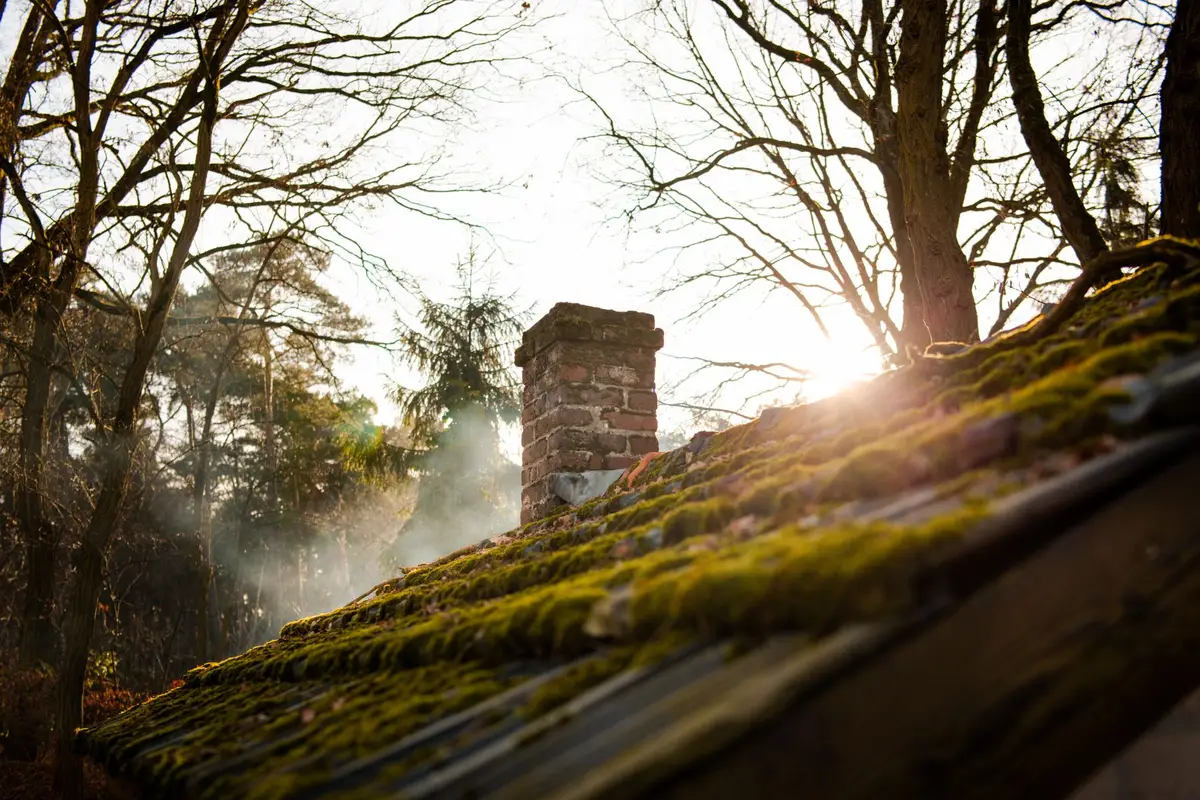
Moss is the soft, raised growth: green cushions and tufts that sit proud of the tile, usually thickest in the joints, along the bottom edges of tiles and around the ridge. In a dry spell it can turn brown or golden and look dead. It is not dead; it revives with the next rain.
Moss is the growth worth acting on, for three practical reasons:
- It holds water against the roof. A thick cushion stays wet for days after rain, keeping the tile underneath damp. In a hard frost that water expands.
- It lifts and channels water. Moss growing in the overlaps between tiles can wick water sideways and backwards, which is the one direction a roof is not designed to handle.
- It ends up in the gutters. Moss sheds continuously, and wind and birds pull clumps off. It is one of the most common reasons a Dublin gutter blocks, and a blocked gutter is how a roof problem becomes a damp-wall problem.
Lichen: slow, stubborn, and mostly cosmetic
Lichen is the flat growth: crusty circles and patches stuck tight to the surface, in grey, pale green, white, or a striking yellow-orange. It is not a plant but a partnership between a fungus and an alga, and it grows extremely slowly, often only millimetres a year. A roof covered in lichen has usually been building it up for a long time.
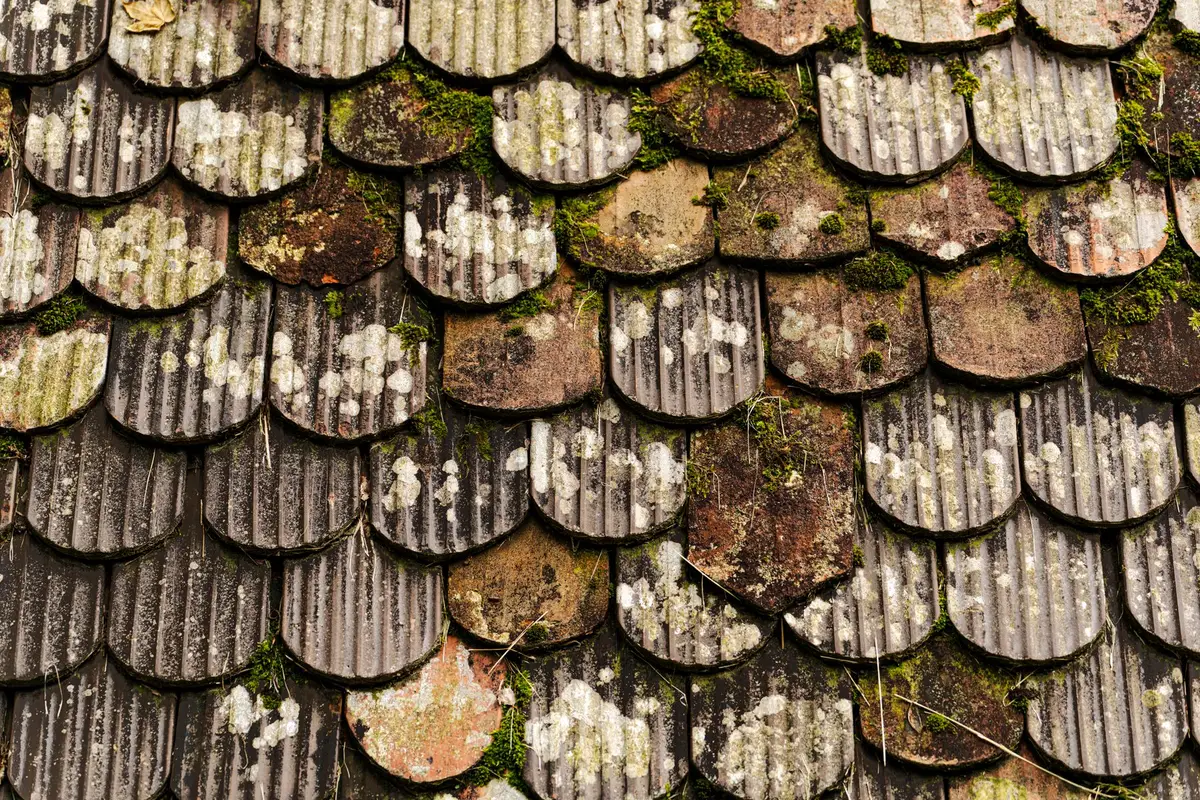
You will read that lichen dissolves roof tiles. The evidence for meaningful damage to a concrete or slate roof is thin, and the sources disagree. The honest position is that lichen is mainly an appearance problem. It does not hold water the way moss does and it does not fill gutters. What it does do is grip hard: it is anchored into the surface, so scraping it off tends to take the tile’s finish with it. The sensible approach is to kill it with a biocide and let it weather off over the following months, rather than remove it by force. Even then, the patch where it sat may stay a different shade.
Algae and dark streaks
Algae is the flattest growth of all: a green film or, more often on a roof, dark grey to black streaks running straight down the slope. The streaks follow the water. They are heaviest below anything that concentrates run-off, such as the ridge, a chimney, a valley, or the edge of a dormer, and on the side of the roof that dries slowest.
Algae does no structural harm. It is a cosmetic problem, and it responds well to a low-pressure biocide wash because there is no bulk to remove. The same organisms produce the green on north-facing render, which is why a roof and the walls below it often go green on the same elevation.
Things that look like growth and are not
A few marks often get mistaken for growth. No biocide will shift them, and it helps to know that before paying for one:
- White bloom on newer concrete tiles. A chalky, patchy whitening on tiles a few years old is usually lime bloom, salts carried to the surface as the concrete cures. It fades on its own with weathering.
- Soot below a chimney. A dark fan spreading downhill from a chimney stack on a house that burns solid fuel is often deposit rather than algae. It looks similar but does not respond to the same treatment.
- Rust-brown streaks usually come from a corroding fixing, a satellite dish bracket, or old metal flashing, not from anything living.
- General fading. Concrete tiles lose their surface colour over decades. That is weathering of the tile, not growth on it, and cleaning will not bring the colour back.
Why one side of the roof is always worse
Every type of growth on a roof is limited by how long the surface stays wet. That is why the pattern on most Dublin roofs is so predictable: the north-facing pitch carries more than the south, a pitch under trees carries more than an open one, and the area below a chimney or valley carries more than the open slope. Overhanging branches make it worse twice over, once with shade and again with leaf litter that holds moisture in the gutters and joints.
If only one pitch is affected, that is usually the only one that needs work, and a quote should reflect that. Houses near the sea have their own reasons for regrowing faster, which are covered in why coastal Dublin homes need cleaning more often. What a clean involves from start to finish is in how roof cleaning works.