Glan Exteriors

Driveways & patios

Driveway, Patio & Decking Cleaning

The green film on a north-facing patio is algae, and it is why the surface is slippery in October. Getting it off is straightforward; getting it off without stripping the surface or blowing the jointing sand out is the part that takes judgement.

Transformation

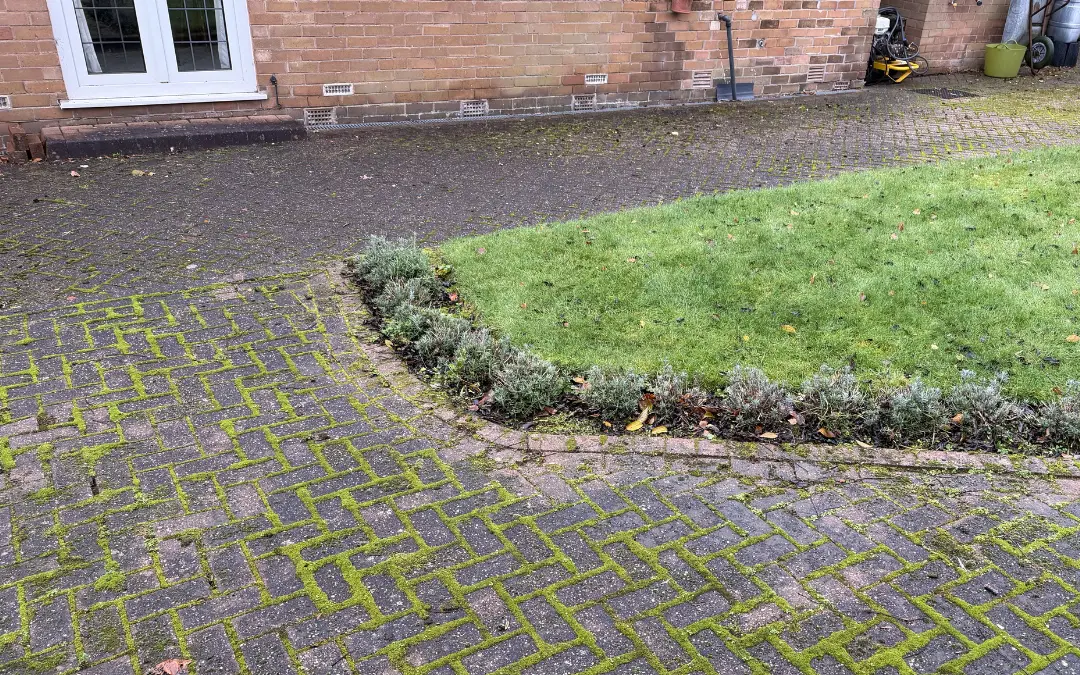
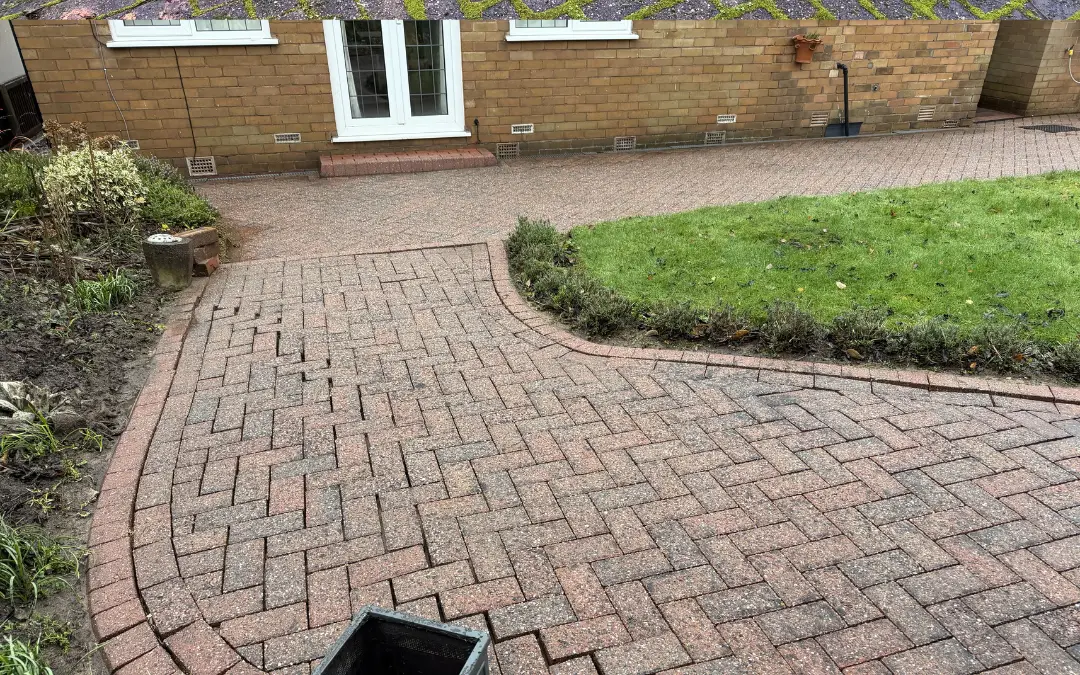
Block paved driveway and path

Moss and weed growth through the joints, with the paving colour lost under a green film.

The same block paving cleaned and re-sanded
Block paving covered in moss with weeds through the joints
BeforeAfter
Drag the photo, or use the slider. Left of the divider: before. Right: after.

What we did

Cleaned at a pressure the blocks could take, then the joints re-sanded so the growth has less to come back into.

More before and afters

By surface

Every surface takes a different pressure

This is the one part of exterior cleaning where high pressure is often correct — and the one place using it indiscriminately does the most damage.

Block paving

Takes pressure well, and the work is only half done when it looks clean. Cleaning washes the jointing sand out along with the moss, and paving left with empty joints loses its interlock, moves under traffic and grows weeds back faster than before. Re-sanding afterwards is part of the job, not an upsell.

Concrete and imprinted concrete

Plain concrete is robust. Imprinted concrete is a printed surface under a sealer, and aggressive cleaning takes the sealer off and dulls the colour — after which it needs resealing to look right, which is a larger job than the customer asked for. So it is cleaned to the sealer rather than through it.

Tarmac

The one that surprises people. Tarmac is bitumen holding stone together, and high pressure lifts the stone out and leaves a pitted surface that cannot be put back. It is cleaned at low pressure with a treatment, or it is left alone, and anyone offering to pressure wash a tarmac driveway is offering to damage it.

Natural stone and porcelain

Sandstone, limestone and coal vary from hard to soft within the same category, and softer stone marks under a lance in the shape of the pass. These are cleaned at reduced pressure with more contact time and a wider fan, which takes longer and is the reason a stone patio is not priced like a concrete one.

Timber decking

Cleaned along the grain, at low pressure, or the timber fibres are raised and the boards end up furred and rougher than they started. The grooves hold the debris that makes decking slippery, so clearing them is most of the actual benefit.

A paved surface being jet washed, the cleaned strip clearly lighter than the rest
Jet washing paving. The pressure is set to the surface — this is one of the few jobs where high pressure is the right answer.

The part nobody photographs

Re-sanding is what makes it last

A freshly cleaned driveway and a properly finished one look identical on the day.

The jointing sand between blocks is not decoration. It transfers load between blocks so the surface behaves as one, and it fills the space weed seed would otherwise root into. Cleaning washes it out — that is unavoidable, and it is why the joints look dark and open immediately afterwards.

Kiln-dried sand brushed back in restores the interlock and closes the gaps. It takes an hour and it is the difference between a driveway that still looks right next spring and one that has moved, chipped at the edges and regrown weeds through open joints. If a quote does not mention it, it is worth asking whether it is included.

Where the patio sits under a roofline that keeps shedding onto it, the roof is usually the reason it dirties so quickly, and doing both together saves cleaning the same surface twice.

Get your driveway or patio quoted

Useful to send: a photo of the whole area from one end, a close-up of the surface so we can see what it is made of, and a rough size if you know it. Surface type changes the method, so the close-up matters more than it looks.

Request a Quote

Questions

About driveway, patio and decking cleaning

Will pressure washing damage my driveway?

It depends entirely on the surface. Block paving and plain concrete take it well. Tarmac does not — high pressure lifts the stone out of the bitumen and the pitting is permanent. Imprinted concrete has a sealer that aggressive cleaning removes, which turns a clean into a resealing job. Softer natural stone marks in the pattern of the lance passes. The surface decides the pressure, and getting that judgement right is most of what you are paying for.

Why does the paving need re-sanding afterwards?

Because cleaning removes the jointing sand along with everything growing in it. Those joints are structural: they are what makes block paving interlock and share load rather than behaving as loose blocks. Paving left with empty joints moves under vehicle weight, the edges chip, and weeds return faster because there is more space for seed to settle. Kiln-dried sand brushed back in afterwards is what makes the result last.

Will the weeds come back?

Some will, and anyone promising otherwise is overselling. Weed seed arrives on the wind and in birds continuously, so the question is how quickly it can establish. Full joints give it much less to root into than empty ones, which is why re-sanding matters more than any treatment. A patio in shade that stays damp will always need doing more often than one that dries out by mid-morning.

Can you clean around planting and lawns?

Yes, and it is mostly about where the runoff goes rather than where the lance points. Beds beside the work get soaked before and after so anything reaching them is diluted, and the wash is directed to a gully rather than allowed to run into a border or across a lawn. Where a treatment is used near planting, that is flagged before the day rather than discovered on it.

How long does a driveway take?

Most domestic driveways and patios are a day, and the variables are area, how much growth has to come off before the surface appears, and whether re-sanding is needed. What extends it is usually access — a rear patio reached through a house or a narrow side passage means everything is carried rather than run off the van, and that is a real difference rather than an excuse.

My driveway looks gritty rather than sandy in the joints — is that different?

Very likely permeable paving, built to let rain pass through the surface into the ground rather than run off it, and it needs different treatment. Kiln-dried sand — the normal fix for washed-out joints — actively clogs a permeable surface, so re-jointing it needs a specific coarse, free-draining compound instead.

Do you clean granite steps, setts and cobblelock on older properties?

Yes, and it is treated as a different job from a modern driveway rather than a faster version of one. Granite tolerates real pressure but original lime pointing between setts or steps generally does not, and reclaimed or original stone is far more expensive to damage than a modern paving block.

Do I need to tell my neighbours before having the driveway done?

Not legally, no — but on a terrace or semi-detached driveway close to a shared boundary, noise and where the runoff goes are both worth a moment's thought before the work starts rather than after.

Patio slippery again?

Send a photo of the surface up close and we will tell you what it is, what pressure it takes, and what it costs.

Call Now085 169 0593Get a Quote