
Two houses of the same age and the same construction, one a few hundred metres from the sea and one ten kilometres inland, do not go green, mossy or streaked on the same timeline. The difference is not how much it rains — Dublin’s rainfall does not vary that much across the city — it is what is actually in the air.
It is not about rainfall
The instinct is to assume a wetter spot gets dirtier faster, and dampness genuinely is what algae and moss need to establish — that is why a shaded, north-facing wall always goes green before a sunny one on the same street. But rainfall totals across Dublin do not differ enough between the coast and the suburbs to explain the gap that actually shows up on coastal buildings. Something else is doing the extra work.
What salt-laden air actually does
Onshore wind carries fine salt spray well inland from the coastline itself, and it lands continuously on every exposed surface — not just in a storm, but as a background process on an ordinary breezy day. Salt is hygroscopic: it pulls moisture out of the air and holds it against the surface it has settled on, which keeps render, roof tiles and paving damp for longer after rain has actually stopped falling. Longer damp periods are exactly the condition algae and moss need, so a coastal wall is not just exposed to more salt — it is effectively kept wetter for longer, which is the actual mechanism behind the faster regrowth.
Salt also accelerates staining on porous surfaces and speeds up the general weathering of masonry paint and render finishes, which is a separate, slower effect from the algae growth but compounds it over years rather than seasons.
Which parts of Dublin this actually affects
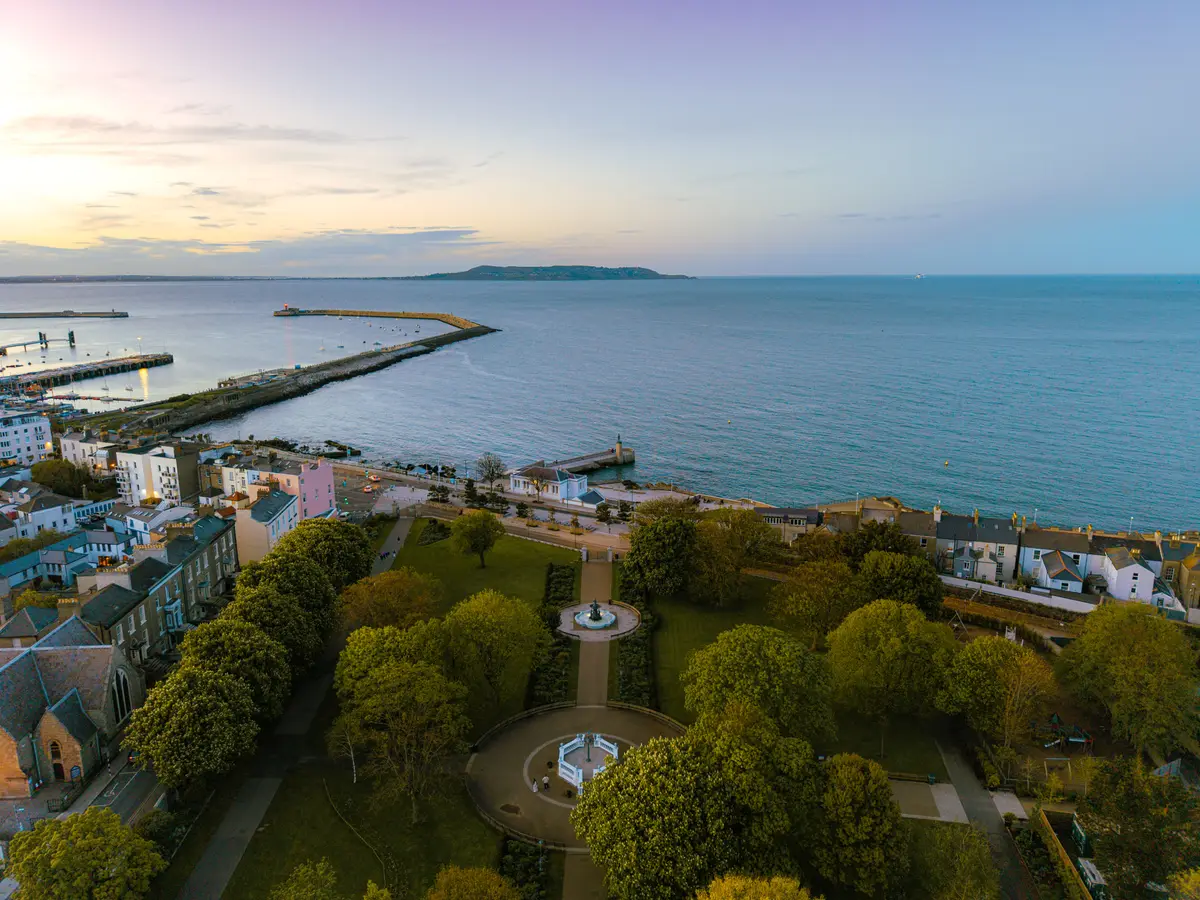
Exposure falls off with distance from open water rather than stopping at a fixed line, but as a rough guide: Clontarf, Sutton, Howth, Portmarnock, Malahide, Dun Laoghaire, Dalkey and Sandymount sit close enough to open coastline that the effect is consistently noticeable, particularly on elevations facing the water directly. Further inland — Tallaght, Lucan, Blanchardstown, Clondalkin and most of the city centre proper — the salt effect fades to negligible and aspect and shade become the dominant factors instead, the same way they are anywhere else in Ireland.
There is no sharp cutoff between the two, and a property on an exposed rise a few kilometres inland can catch more wind-blown salt than one tucked into a sheltered coastal street a few hundred metres closer to the water. Elevation and shelter matter as much as raw distance.
What actually changes on a coastal job
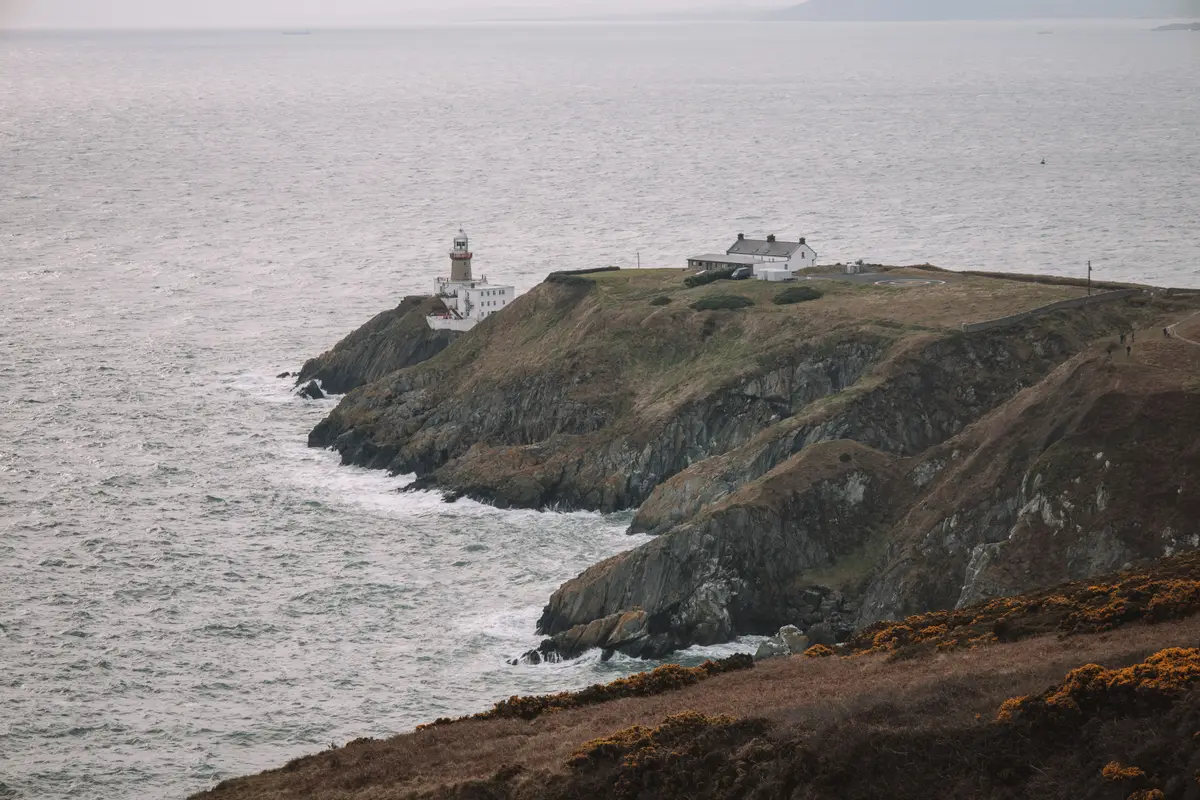
The method does not change — render is still never pressure washed regardless of postcode, and the surface-by-surface rules for paving apply identically on the coast road as anywhere else. What changes is realistic expectation of how long a clean lasts. Where an inland house might reasonably go a couple of years between treatments, the same finish on an exposed coastal elevation returns to needing attention meaningfully sooner — not because the last clean was done any differently, but because the air doing the damage never stopped.
The practical response is not cleaning more aggressively; it is a shorter interval between otherwise identical visits, and on render specifically, paying real attention to whatever is keeping a given elevation wet in the first place — a coastal wall that is also shaded or poorly drained will always be the worst case on the street.