
Search for the best time of year to clean a roof and most of what you find says summer. That advice is mostly written for places with a hot, dry summer and a frozen winter. Ireland has neither, and moss here does most of its growing in the months that advice tells you to avoid. Here is how the year actually works for a roof in Dublin and the counties around it.
The short answer
Autumn and spring are the best windows, and winter works on the right day. Summer is perfectly workable for removing moss, but it has trade-offs that people do not expect. What matters on the day is not the month, but whether there is a dry, calm, frost-free spell long enough for the treatment to work.
Season by season
Autumn (September to November)
Moss is waking up after the summer and growing actively again, and a biocide works on living growth. Days are still long enough for a full job, and there are plenty of mild, dry spells on the east coast. The one catch is leaves. If the house is near trees, a roof cleaned in early October will have its gutters full again by the end of November. On a leafy road, booking the roof and gutters for after most of the leaves have come down means paying for the gutters once.
Winter (December to February)
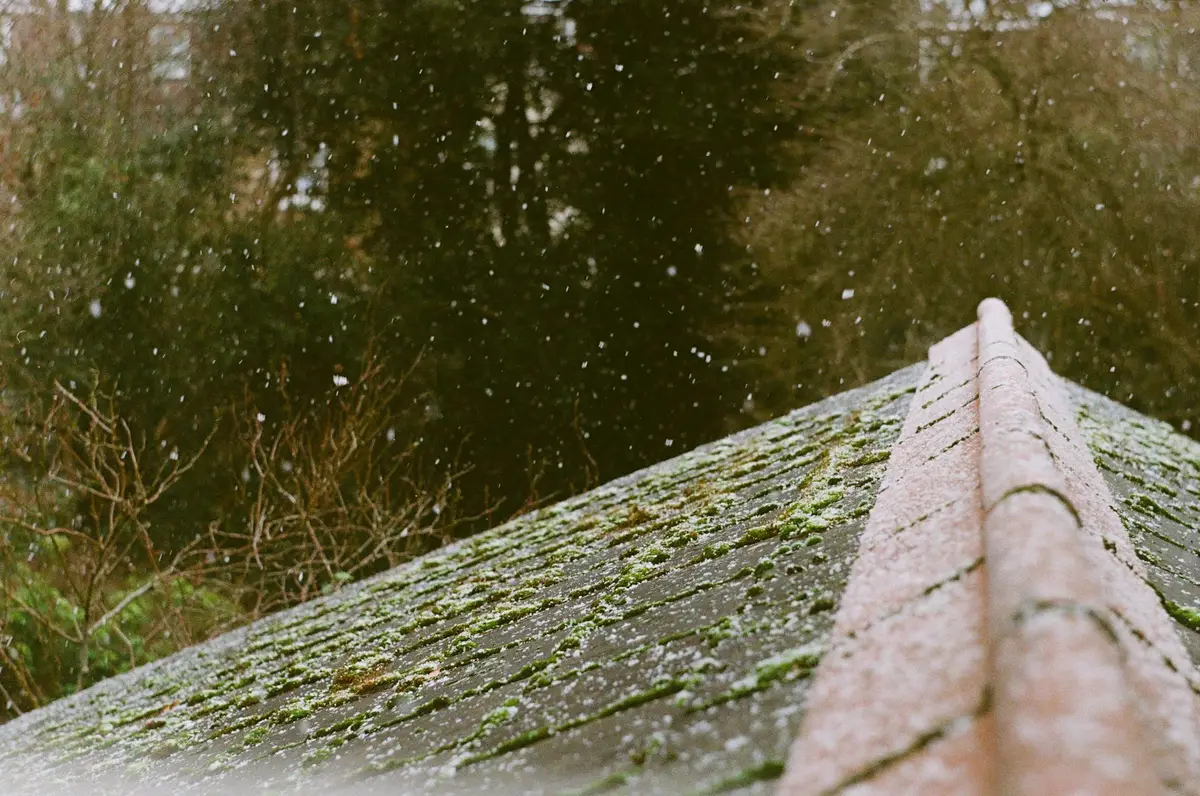
Often dismissed, but workable. Dublin is on the drier side of the country, and a still, bright winter week is ideal. The limits are practical: short daylight, roofs that stay damp with dew until late morning, and frost, because a treatment needs to have soaked in and dried before the surface freezes. Winter jobs need a flexible date rather than a fixed one.
Spring (March to May)
Growth is active, days are lengthening, and the roof is finally drying out between showers. It is a popular time to book, often because people are getting a house ready to sell or to paint. The complication is birds, below.
Summer (June to August)
Long days and a dry roof make summer comfortable to work in, and moss that has dried out is light and comes off easily. But moss that has gone brown in a dry spell is dormant rather than dead, and a treatment applied in hot direct sun can dry on the surface before it has soaked in. Summer is fine for the removal stage; it is not automatically the best season for the treatment that decides how long the result lasts. Many product labels also restrict application in hot conditions, and the label is what a contractor should be following.
Nesting birds
Wild birds and their active nests are protected under the Wildlife Acts, and a roof is a nesting site for more species than people realise. Gulls nest on roofs and chimney stacks in coastal suburbs and in the city, while swifts and house martins nest under eaves and behind fascias. In the breeding season, from roughly March to August, a nest in use is a reason to leave that part of the roof alone until the young have gone.
In practice that rarely cancels a job. It changes which part of the roof is done, or moves the date. But if you can see gulls standing guard on your chimney in May, it is worth saying so when you ask for a quote.
The order to do things in
If the roof is one of several jobs on the list, the order matters more than the season. Everything that comes off a roof lands on what is below it: moss in the gutters, run-off down the walls, debris on the paving. So work from the top down:
- Roof, first.
- Gutters, immediately after, because they will be full of whatever came off the roof.
- Walls and fascias, once the roof is no longer shedding onto them.
- Driveway and patio, last of all.
Doing it the other way round means paying to clean the drive and then watching the roof wash down onto it. The same logic applies to painting: get the roof done before the house is painted, not after.
What actually moves a date
Whatever the season, three things postpone a roof clean on the day: wind strong enough to carry spray, rain forecast before the treatment has dried, and frost. The treatment stage and why it needs dry hours is covered in how roof cleaning works.